
Blogs
Dropdown Arrow
Getting Your Sensors Summer-Ready

Getting Your Sensors Summer-Ready

A morning of checks in spring is the cheapest insurance you can buy for summer. Once irrigation is running and the heat sets in, your sensors are making decisions for you around the clock, and a quiet probe or a blocked rain gauge can mean watering on bad numbers or missing an alert altogether.

The good news is most problems are easy to spot and fix before the busy season. Work through the checks below now, while you still have time to get an INCYT rep out if something needs replacing.

‍

1. Check your data is coming through

Start in the app, not the paddock. Log in and go through a quick scroll in the “devices” tab on your account, checking that each Blue Node, BLE sensor, or tracker has reported recently and that the battery is in the green. Things to look for:
‍

  • Gaps in the data - Data that hasn’t come through for more than a day may mean a sensor is blocked, the Blue Node is dead, or wildlife have gotten to the cables.
  • Weak signal strength - A Blue Node showing weak signal strength can still capture data, it may just be intermittent. Get ahead of it by ensuring the device isn’t blocked by anything or consider mounting the Blue Node higher.
  • Unlinked Sensors - Double check for hibernated devices or devices that are yet to be linked to an application so you’re completely set up for the season.


Make a list of anything that looks off, then take it with you when you do your physical checks.

‍

2. Clean your hardware

The two most common reporting anomalies can be easily fixed with the wipe of a damp cloth. Over time, solar panels collect dust, bird droppings and spray drift. Give panels a quick wipe over with a soft, damp cloth to keep your reporting up. 

It’s also good to check your weather stations and rain gauges. A blocked rain gauge is one of the most common reasons for missing or low rainfall readings, and it's usually a five-minute fix. Tipping bucket gauges measure rain by counting how many times a small bucket fills and tips, so anything that stops water reaching the bucket or stops it tipping freely will throw your numbers out. To clean it out:
‍

  1. Remove the funnel and clear out leaves, dust, seeds, insects, spider webs and bird droppings.
  2. Check the filter or mesh (if fitted) and rinse it clean.
  3. Gently rinse the tipping bucket with clean water. 
  4. Tip the bucket by hand a few times to make sure it moves freely and doesn't stick.
  5. Check the drain holes underneath are clear so water can escape.
  6. Make sure the gauge is still level and secure on its mount before you put the funnel back.


Once it's back together, pour a small amount of water slowly into the funnel and check the app records it. Rainfall data matters most when you're deciding whether to skip an irrigation, so it's worth getting right.

‍

3. Clear around devices and check for damage

Spring growth can catch you out. Grass and weeds that were short in August can be shading a panel or blocking signal by November.
‍

  • Slash or spray around each device so it stays clear through summer.
  • Check mounts, posts and brackets are solid and the device is still level.
  • Look over cables for cuts, kinks or chewing. Rodents, cockatoos and livestock are all known offenders.
  • Make sure devices are well clear of machinery paths.
  • Check enclosures are sealed and free of ants, wasps and spiders.

‍

4. Check your sensors are calibrated correctly

A sensor can be working perfectly and still give you the wrong answer if it's set up with the wrong reference points. Calibration is what turns a raw reading into a number you can trust, and it's worth reviewing before summer when every megalitre counts.

‍

Ultrasonic water level sensors in dams

Ultrasonic sensors measure the distance from the sensor down to the water surface. On their own, they only tell you that distance. To turn it into a water depth, and then into a volume, the system needs to know:
‍

  • The sensor's exact mounting height relative to the bottom of the dam.
  • The shape of the dam, so a change in depth can be converted into a change in volume.


That second point is where many readings go wrong. Dams are rarely a simple shape. Often, the volume held in the top metre can be very different from the volume in the bottom metre. If volume is estimated from rough dimensions or old plans, your reported storage can be well off.

‍

Why an official survey helps

‍

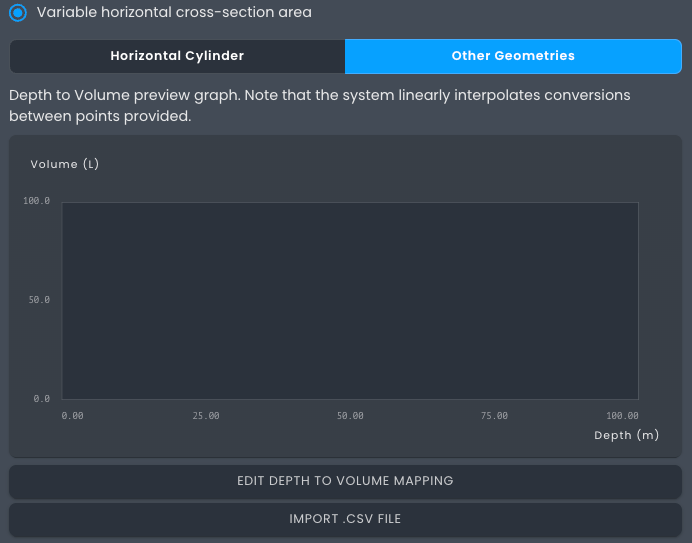
A professional survey of your dam maps its actual shape and gives an accurate depth-to-volume relationship (sometimes called a storage curve).
‍

Setting up your sensor with that data means:

  • the volume you see in the app reflects what's really in the dam
  • you can plan irrigation and stock water with confidence
  • your records hold up if you need to report storage or water use


If your dam has never been surveyed, or it has silted up or been modified since, it's worth considering before summer.


If you have you survey data ready to go, you can upload this in the settings tab of your application!

‍

Keep the sensor's view clear

Even a well-calibrated ultrasonic sensor can be thrown off by things in its path. Check:
‍

  • Nothing sits between the sensor and the water, such as vegetation, floating debris, spider webs or nests
  • The sensor face is clean and free of spider webs or mud
  • The mount hasn't sagged, tilted or been bumped, which changes the measured distance


After any change to mounting height or position, the calibration needs updating too.

‍

6. Review alarms

Alarm thresholds that made sense in winter may be too relaxed, or too noisy, for summer.
‍

  • Check your thresholds suit summer conditions, such as soil moisture refill points, dam levels and flow rates.
  • Make sure alerts are going to the right people, including any new staff or contractors.
  • Remove anyone who no longer needs them, so important alerts don't get ignored.

‍

Need a hand?

If something doesn't look right, or you'd like help reviewing your calibration or setting up a dam with survey data, get in touch with the INCYT team. We'd much rather help you sort it now than in the middle of summer after a missed reporting.

About the author
Matt Westgarth

Matt Westgarth joined INCYT’s commercial team in April 2024 as Head of Sales. With over 15 years of experience in the agricultural industry through roles with Cotton Growers Services and Bayer Crop Science, Matt has a strong background in agronomy, branch / regional management and business development. Matt’s expertise and leadership are instrumental in helping INCYT continue to unlock exponential growth for growers through innovation in monitoring, automation, and more.

Your cart
Your cart is empty
Go to shop
Product Name
$0
$0
Option 1 / Option 2 / Option 3
Weekly Delivery
Product Discount (-$0)
COUPON1 (-$0)
-
Thank you! Your submission has been received!
Oops! Something went wrong while submitting the form.
+
Delete
Success message won't be visible to user. Coupon title will be listed below if it's valid.
Invalid code
Coupon1
Coupon2
Success message won't be visible to user.
Error message won't be visible to user.
Subtotal
$0
Order Discount
-$0
COUPON2
-$0
Total
$0
Thank you! Your submission has been received!
Oops! Something went wrong while submitting the form.